
Xactimate Estimates: The Adjuster Psychology Your Scope Is Missing
The Estimate That Gets Paid Is Not Always the Most Accurate One
A restoration contractor in Columbus wrote a technically flawless Xactimate estimate last spring — every line item supported, every measurement verified against moisture readings, every labor unit defensible. The carrier cut it by 22 percent at desk review. Three weeks later, a competitor on a comparable loss two miles away got paid within 4 percent of scope. The difference was not accuracy. It was structure.
Most training on Xactimate estimates focuses on the line items themselves: which codes to use, how to calculate square footage, when to add a general contractor overhead and profit line. That knowledge matters. But it does not explain why two equally accurate scopes produce wildly different settlement outcomes. The gap lives in how a scope is read by someone who did not walk the loss — and who is looking for reasons to reduce it.
How Desk Adjusters Actually Read a Scope
A desk adjuster reviewing a remote Xactimate estimate is not reading it the way you wrote it. They are scanning for pattern breaks — line items that look anomalous against their internal benchmarks, quantities that seem high relative to square footage, categories that trigger a secondary review flag. Most carriers have soft audit rules built into their estimating platforms. A scope that trips three or more of those flags goes to a supervisor or a dedicated review queue. That is where cuts happen.
The adjuster is also reading narrative — or noticing its absence. A scope with no supporting notes on non-standard line items reads as a guess. A scope where every departure from standard pricing has a one-sentence explanation attached to the relevant line reads as documented professional judgment. Those are treated differently, even when the dollar totals are identical.
Two specific habits cause the most unnecessary pushback:
- Orphaned line items. A line for "additional labor — containment setup" with no corresponding moisture map reference or photo note looks fabricated. The same line tied to a specific room, a specific date, and a specific drying log entry looks like a record.
- Quantity without context. Forty-eight linear feet of baseboard removal is unremarkable on a 600-square-foot kitchen. On a 200-square-foot bathroom, it triggers a question. A single note — "baseboard runs continuous along built-in cabinetry perimeter, see photo set 3" — answers that question before it becomes a phone call.
Water Damage Logs Are Scope Defense, Not Paperwork
Thorough water damage logs are the single most underused asset in a restoration scope. Most contractors keep them because their drying protocol requires it. Few treat them as the evidentiary backbone of their Xactimate estimate.
A daily moisture reading log that shows a Category 2 loss at 94 percent relative humidity on day one, 81 percent on day two, and 68 percent on day three does two things simultaneously: it confirms the drying timeline was appropriate, and it justifies the equipment days billed. Without that log, three days of LGR dehumidifier rental is a number. With it, three days is a documented necessity.
The same logic applies to category and class determinations. When a scope calls for Class 3 drying — walls, ceiling, and floor all affected — the water damage logs need to show readings from all three planes. If only floor readings appear in the documentation, expect a reclassification argument. Adjusters are not being difficult when they push back on this; they are doing exactly what their review guidelines tell them to do.
The practical fix: before submitting any scope, run a one-minute audit. For every equipment line item, confirm there is a corresponding log entry. For every affected area designation, confirm there is a reading from that area on at least two separate days. If either check fails, the scope is not ready.
The Remote Estimate Problem Nobody Talks About
The shift toward remote Xactimate estimate review — where an adjuster or IA firm scopes from photos and sketches rather than a site visit — has changed the evidentiary standard without anyone formally announcing it. Contractors who built their documentation habits around in-person inspections are getting cut on remote reviews because the documentation that worked face-to-face does not survive the translation to a photo set.
Three things that disappear in a remote review without deliberate documentation:
- Odor and contamination scope. A Category 3 loss with sewage contamination is obvious on site. In a photo set, it looks identical to a Category 1 unless the photos include close-ups of the contamination source, a copy of the ATP or microbial test results, and a written note in the scope narrative explaining the classification.
- Hidden damage. Wet insulation behind a wall cavity, deteriorated subfloor under vinyl, corroded fasteners inside a wall assembly — none of these show in a wide-angle room photo. They require a dedicated photo with a measurement reference, a moisture reading from inside the cavity, and a scope note that explains the access method used to discover them.
- Sequence and cause. A remote adjuster looking at a finished scope cannot tell whether the drywall removal happened before or after the moisture readings peaked. A timestamped photo log tied to the water damage logs resolves this. Without it, the sequence is assumed — and the assumption usually favors the carrier.
Where Restoration Software Fits Into Scope Quality
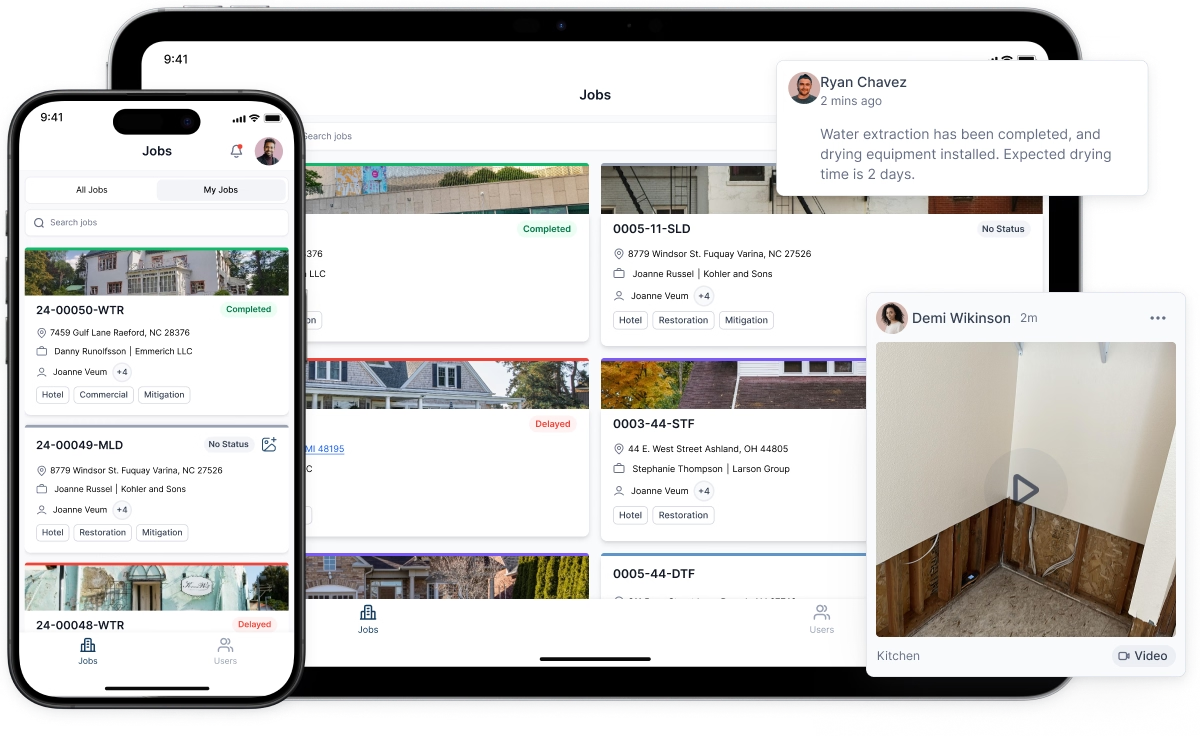
The connection between restoration software and estimate quality is direct, but it only works if the software is configured to enforce documentation discipline — not just store it.
A restoration CRM that captures moisture readings, equipment placement, and daily technician notes in a structured format produces export-ready documentation. The same data stored in a notes field as free text produces a wall of information that nobody will read during a desk review. Structure matters because the person reviewing your scope is looking for specific data points, not reading a narrative.
CRM for restoration companies that integrates directly with Xactimate — or that exports structured job data in a format that maps cleanly to Xactimate line items — eliminates the manual transcription step where errors and omissions most often occur. When a technician logs three dehumidifier units placed in rooms 1, 2, and 4 on day one, and that data flows automatically into the equipment section of the estimate, the scope reflects what actually happened. When that same data lives in a separate app, a paper form, and a text message thread, the scope reflects what someone remembered to type.
The restoration scope itself is only as defensible as the data behind it. Software does not make a scope more accurate — the field work does. But software determines whether that accuracy survives the trip from the job site to the adjuster's desk.
The Line Items Adjusters Flag Most Frequently — and What to Do About Them
Based on patterns across carrier desk reviews and IA firm feedback, five categories draw disproportionate scrutiny:
- Controlled demolition labor. Any demo line that exceeds the square footage implied by the affected area diagram needs a note. "Demo extended to adjacent hallway due to moisture migration confirmed in readings 7 and 8, see log dated [date]" is sufficient.
- Antimicrobial application. Carriers frequently challenge the square footage billed here. Your scope should state the application method (spray, wipe, or fog), the product used, and the surface area treated. A photo of the technician applying product with a visible room reference is worth more than a paragraph of explanation.
- Pack-out and contents manipulation. This category gets cut when there is no contents inventory. Even a basic room-by-room list of items moved, photographed and timestamped, reduces the challenge rate significantly.
- Temporary power and lighting. If you bill it, document why permanent power was unavailable or unsafe. A photo of the breaker panel with a note from the electrician or a moisture reading from the panel room is usually enough.
- General contractor overhead and profit. This is still challenged on single-trade jobs. The defense is straightforward: if you coordinated more than one subcontractor or trade, document the coordination in the scope narrative with dates and contractor names. If you did not, the line is harder to defend and may not belong there.
A Practical Pre-Submission Checklist
Before any scope leaves your system, run it against these five questions:
- Does every equipment line item have a corresponding entry in the water damage logs showing placement date, room, and daily readings?
- Does every non-standard quantity have either a photo reference or a scope note explaining it?
- Are category and class determinations supported by readings from all affected planes on at least two separate days?
- Does the photo set include close-ups of any hidden damage, contamination, or access work — with measurement references visible?
- Are all line items that require coordination or sequencing tied to timestamped documentation?
A scope that passes all five is not guaranteed to settle without negotiation. But it is structured to survive a desk review without the cuts that come from missing context — and that difference, compounded across a year of jobs, is the margin between a restoration business that grows and one that grinds.


