
Restoration Management Software: Streamline Operations and Grow Your Business
Understanding Restoration Management Software
The restoration industry operates under unique challenges that demand specialized solutions. Restoration companies must manage complex projects, coordinate multiple teams, handle customer communications, and ensure accurate estimations all while maintaining profitability. This is where restoration management software becomes essential.
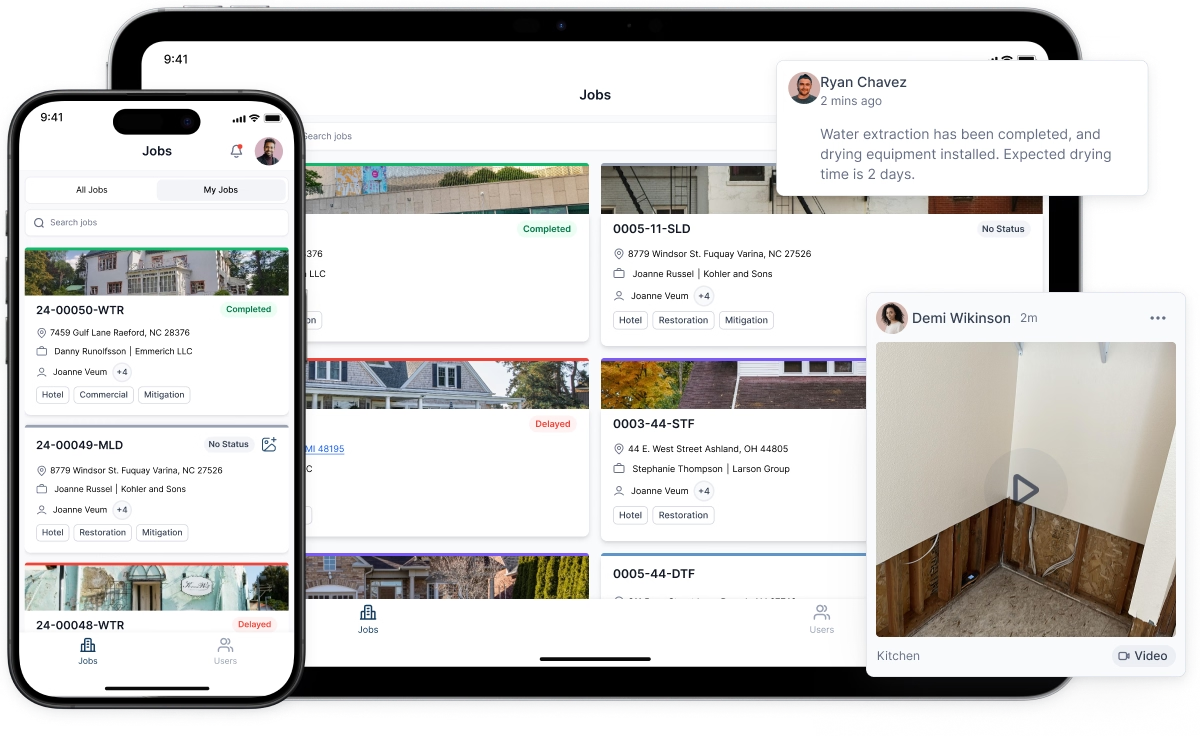
Restoration management software is a comprehensive platform designed specifically for water damage, fire damage, mold remediation, and other restoration businesses. These integrated systems combine project management, customer relationship tracking, estimating tools, and business analytics into one unified solution. Unlike generic project management software, restoration software addresses the specific workflows and requirements that restoration companies face daily.
The Core Components of Modern Restoration Software
Effective restoration software typically includes several interconnected modules that work together to streamline your entire operation. Understanding these components helps you evaluate whether a solution is right for your business.
Restoration CRM functionality serves as the foundation for customer relationship management. A dedicated CRM for restoration companies tracks every customer interaction, from initial contact through project completion and follow-up. This ensures no opportunity falls through the cracks and helps your team maintain consistent communication with clients. The best restoration CRM platforms integrate directly with your project management tools, so customer information flows seamlessly across departments.
Restoration scope documentation is critical for accurate project planning and estimation. Modern restoration software allows technicians to capture detailed scope information on-site using mobile devices. This includes damage assessment, photos, measurements, and material requirements. By documenting the restoration scope thoroughly, you eliminate guesswork and reduce the risk of scope creep that cuts into your margins.
Xactimate estimates have become an industry standard for water damage and restoration project estimations. Many restoration software platforms integrate with Xactimate, allowing you to generate professional, detailed estimates directly within your system. This integration saves time and ensures consistency with insurance company requirements and expectations.
Restoration marketing software helps you attract new customers and nurture leads through automated campaigns. These tools manage your online presence, track lead sources, and nurture customers through email and SMS campaigns. Some platforms even include reputation management features that help you build positive reviews and referrals.
How Restoration CRM Transforms Customer Relationships
The customer relationship management aspect of restoration software fundamentally changes how you interact with clients. A CRM for restoration companies centralizes all customer data, making it accessible to your entire team. When a customer calls with a question, your dispatcher can immediately see their history, previous projects, and current status.
This accessibility creates several advantages. First, response times improve because information is instantly available. Second, customer satisfaction increases because clients feel understood and valued. Third, cross-selling and upselling opportunities become obvious when your team can see the full customer relationship history.
Modern restoration CRM platforms also automate routine tasks like appointment scheduling, automated follow-ups, and billing reminders. This reduces administrative burden on your office staff while ensuring nothing gets overlooked. When customers receive timely updates and professional follow-up, they're more likely to recommend your company to others.
Mastering Restoration Scope and Estimation
Accurate restoration scope documentation directly impacts your profitability. The restoration scope includes everything affected by the damage, materials required, labor hours needed, and all associated costs. When your scope is incomplete or inaccurate, you either lose money on the project or lose the customer to a competitor with lower estimates.
Restoration software streamlines the scope process by providing mobile tools for technicians. They can mark up photos, create floor plans, document material requirements, and capture measurements directly on-site. This data flows automatically to your office staff, who can then generate estimates without delays.
When you integrate xactimate estimates into your restoration software, you gain the industry's most respected estimation tool. Xactimate estimates are recognized by insurance companies and provide a professional standard that builds customer confidence. The integration means your on-site scope data automatically feeds into Xactimate, reducing data entry errors and saving hours of administrative work.
Leveraging Restoration Marketing Software
Many restoration companies struggle with consistent customer acquisition. Unlike retail businesses with steady foot traffic, restoration work is often emergency-driven. During slow periods, you need robust marketing strategies to stay top-of-mind with potential customers.
Restoration marketing software addresses this challenge through targeted campaigns, lead nurturing, and customer communication. These tools help you:
Build your reputation through automated review requests and reputation monitoring. Positive reviews increase customer trust and improve your search engine visibility. Track lead sources to understand which marketing channels deliver the best return on investment. Run email and SMS campaigns to stay connected with past customers and encourage referrals. Manage your online presence across multiple platforms with consistent messaging and branding. Capture leads from your website and automatically route them to your sales team.
Operational Efficiency and Financial Impact
The true value of restoration software becomes apparent when you measure operational efficiency and financial results. Companies that implement comprehensive restoration management software typically see improvements in several key areas:
Time savings: Automating routine tasks reduces administrative hours by 20-30%. Your office team spends less time on data entry and scheduling, and more time on activities that generate revenue.
Reduced estimation errors: Consistent restoration scope documentation eliminates the guesswork that leads to underpriced projects. Better estimates mean more accurate project budgets and improved margins.
Faster project completion: When your teams have access to complete information and clear workflows, projects move faster. Quicker completion means faster cash flow and happier customers.
Improved customer retention: A CRM for restoration companies ensures consistent, professional communication. Customers who feel well-served become repeat customers and referral sources.
Better resource allocation: Software dashboards show you which projects are profitable, which team members are most efficient, and where bottlenecks exist. This data-driven approach helps you allocate resources where they have maximum impact.
Choosing the Right Restoration Management Software
Not all restoration software is created equal. When evaluating options, consider these factors:
Industry-specific features: Generic software may not address the unique needs of restoration companies. Look for platforms specifically built for water damage, fire damage, or mold remediation.
Integration capabilities: The best restoration software integrates with tools you already use, including Xactimate estimates, accounting software, and insurance management systems.
Mobile functionality: Your technicians spend most of their time on-site. Robust mobile apps allow them to access information, document work, and communicate without returning to the office.
Customer support: Implementation and ongoing support are critical to success. Choose a vendor that provides thorough training and responsive support.
Scalability: Your software should grow with your business. Whether you're adding team members, expanding service areas, or opening new locations, your platform should adapt without expensive upgrades.
The Future of Restoration Management
Restoration software continues to evolve with advancing technology. Artificial intelligence is being integrated to predict project timelines and identify high-value customers. Advanced analytics help companies optimize pricing and resource allocation. Mobile technology enables more sophisticated on-site documentation and real-time communication.
The restoration companies that embrace these technologies gain significant competitive advantages. They can respond faster to customer needs, provide more accurate estimates, manage projects more efficiently, and ultimately increase profitability.
Conclusion
Restoration management software is no longer a luxury—it's a business necessity. By implementing a comprehensive platform that combines restoration CRM, accurate restoration scope documentation, xactimate estimates integration, and restoration marketing software, you transform how your company operates. The result is improved efficiency, better customer relationships, and increased profitability. Whether you're a solo operator or managing multiple teams, the right restoration software elevates your business and positions you for sustainable growth in an increasingly competitive market.


