
Water Damage Software: Streamlining Your Restoration Business with Technology
The Critical Role of Water Damage Software in Modern Restoration
Water damage is one of the most common and costly property disasters homeowners and business owners face. When disaster strikes, the ability to respond quickly and accurately can mean the difference between a smooth restoration process and a prolonged, expensive ordeal. This is where water damage software becomes invaluable. Modern water damage software solutions streamline every aspect of the restoration process, from initial assessment to final project completion, helping restoration companies operate more efficiently while delivering superior results to their clients.
The restoration industry has undergone significant transformation in recent years, driven largely by technological innovation. Water damage software now plays a central role in how professional restoration companies manage their operations, coordinate with clients, and ensure projects stay on track and within budget.
Understanding Water Damage Assessment and Documentation
One of the most critical aspects of any water damage restoration project is accurate assessment and thorough documentation. Water damage logs are essential records that track the entire lifecycle of a water damage claim, from the moment water intrusion is discovered to final remediation. These logs capture crucial information including the date of loss, water source, affected areas, environmental conditions, and remediation steps taken.
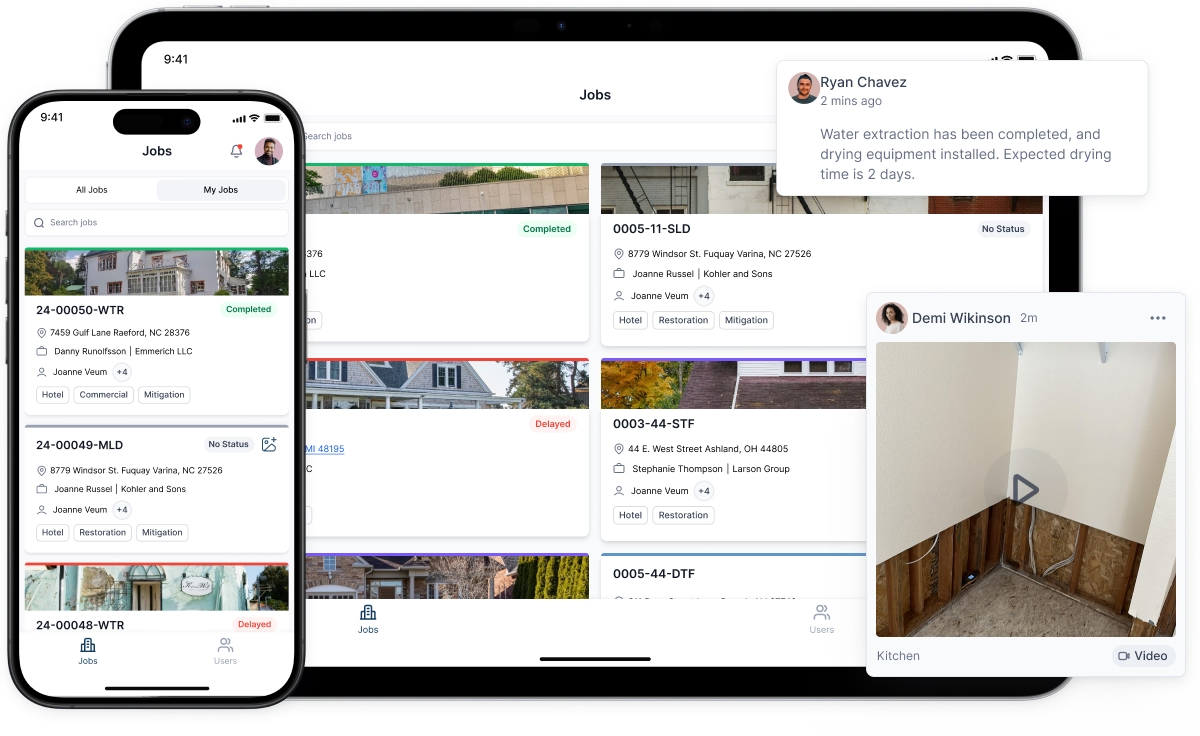
Digital water damage logs have revolutionized how restoration teams document their work. Unlike paper-based systems, digital logs ensure consistency, prevent information loss, and make data easily accessible to all team members. Cloud-based water damage software enables field technicians to update logs in real-time from job sites, and supervisors can monitor progress and verify compliance with industry standards remotely.
Accurate water damage logs are not just for internal tracking—they're critical for insurance claims, customer communication, and regulatory compliance. When documentation is thorough and timely, it reduces disputes with insurance companies and provides a clear record of the work performed.
Defining the Restoration Scope with Precision
Determining the restoration scope is a foundational step that affects all subsequent work and costs. The restoration scope encompasses all areas damaged by water, the extent of that damage, and the specific remediation actions required. Without a clear, accurate restoration scope, projects can quickly spiral into cost overruns and delays.
Advanced water damage software helps establish a precise restoration scope by integrating assessment tools, moisture detection data, and industry standards. This software allows restoration professionals to identify all affected areas systematically, categorize water damage by type (clean water, gray water, or black water), and document exactly what needs to be removed, dried, cleaned, or replaced.
A well-defined restoration scope also serves as a communication tool between restoration companies and their clients. When clients understand what work is being done and why, trust increases and project completion becomes smoother. Digital scope documentation can include photos, measurements, and detailed descriptions that leave no ambiguity about the project's boundaries.
Xactimate Estimates: The Industry Standard for Accurate Pricing
When it comes to providing accurate cost estimates for water damage restoration, xactimate estimates have become the industry gold standard. Xactimate is widely recognized by insurance companies, restoration professionals, and property owners as a reliable tool for determining project costs and scope.
Xactimate estimates incorporate detailed line-item pricing for labor, materials, and equipment needed for restoration work. Rather than providing rough estimates, restoration companies using xactimate estimates can offer precise, itemized proposals that break down exactly what work will be performed and what it will cost. This transparency helps clients understand value and gives insurance adjusters confidence in claim amounts.
For restoration companies, xactimate estimates provide competitive advantage. By generating professional, detailed estimates quickly, companies can respond faster to customer inquiries, win more bids, and reduce the time spent on estimate preparation. The accuracy of xactimate estimates also reduces the likelihood of change orders and disputes over costs.
Remote Xactimate Estimates: Flexibility and Efficiency
One of the most significant innovations in restoration software is the ability to generate a remote xactimate estimate. Remote xactimate estimates allow restoration professionals to create accurate, detailed estimates without always being physically present at the property. Using photos, measurements, and information provided by clients or initial assessment teams, experienced estimators can prepare comprehensive xactimate estimates from their office.
This capability offers multiple advantages. First, it speeds up the estimate delivery process—clients can receive quotes within hours rather than waiting days for an in-person visit. Second, it allows restoration companies to allocate their most experienced estimators more efficiently, having them focus on the most complex projects while routine assessments are handled remotely. Third, it reduces travel time and costs for the company.
However, remote xactimate estimates work best when they're paired with thorough documentation. High-quality photos from multiple angles, accurate measurements, and detailed descriptions of damage severity are essential for remote estimators to create accurate quotes. Many restoration companies now combine remote estimation with strategic in-person verification visits to ensure accuracy.
The Power of Restoration CRM Systems
Beyond estimation and scope definition, restoration companies need systems to manage customer relationships, communications, and project workflows. This is where a restoration CRM becomes invaluable. A restoration CRM is a customer relationship management system specifically designed for the restoration industry, with features tailored to how restoration companies operate.
A comprehensive restoration CRM tracks every interaction with customers, manages lead follow-up, coordinates between sales and service teams, and maintains detailed customer histories. When a customer calls back with questions or a new claim, all their previous information is immediately available. This creates better customer experiences and improves efficiency.
The best restoration CRM systems integrate with other software tools, including water damage documentation systems and estimation platforms. This integration eliminates manual data entry, reduces errors, and ensures all teams are working with the same current information. A restoration CRM also provides valuable analytics about lead sources, conversion rates, and customer lifetime value.
Restoration Project Management Software: Coordinating Complex Work
Water damage restoration projects often involve multiple teams working on different aspects simultaneously. Drying equipment needs to be placed and monitored, contaminated materials must be removed, structural drying must proceed according to science-based timelines, and inspections must be scheduled. Coordinating all these moving parts requires restoration project management software.
Restoration project management software provides a centralized platform where project managers can assign tasks, track progress, manage timelines, and allocate resources. Team members receive notifications about their assignments, can update task status from the field, and managers maintain visibility into the entire project in real-time. When unexpected issues arise, managers can quickly reallocate resources and adjust timelines.
The best restoration project management software also integrates equipment and drying data, allowing managers to monitor equipment status, track drying progress against scientifically-established timelines, and make data-driven decisions about when work is complete. This level of oversight helps ensure quality, prevents unnecessary delays, and keeps projects profitable.
Integration: The Key to Comprehensive Water Damage Software Solutions
While each component of water damage software—xactimate estimates, restoration CRM, water damage logs, and project management tools—provides value on its own, the real power emerges when these systems integrate seamlessly. Integration eliminates data silos, reduces redundant data entry, and ensures consistent information across all business operations.
For example, when a restoration scope is finalized, that information automatically flows into xactimate for accurate estimating. Once an estimate is approved and work begins, the scope and estimate data feed into the project management system to guide task assignment and progress tracking. Customer information from the restoration CRM automatically populates communications and reports. This integration transforms water damage software from a collection of separate tools into a unified platform that drives business efficiency.
Choosing the Right Water Damage Software for Your Business
Not all water damage software solutions are created equal. When evaluating options, restoration companies should look for platforms that offer comprehensive functionality across estimation, documentation, customer management, and project coordination. The software should be user-friendly for field technicians and office staff alike, with mobile apps that enable crews to work effectively from job sites.
Security is another critical consideration. Water damage software handles sensitive customer information and proprietary business data, so robust security features and data backup capabilities are essential. Cloud-based solutions with automatic updates and disaster recovery features offer advantages over locally-installed software.
Finally, consider integration capabilities and customer support. The best water damage software solutions integrate with industry-standard tools and provide responsive support to help your team succeed. Look for vendors who understand the restoration industry and continuously update their software with new features and capabilities.
Conclusion: The Future of Water Damage Restoration
Water damage software has become essential infrastructure for professional restoration companies. From accurately documenting water damage through comprehensive water damage logs, to establishing precise restoration scopes, generating professional xactimate estimates both in-office and remotely, managing customer relationships through a restoration CRM, and coordinating complex projects with restoration project management software—modern solutions address every aspect of the restoration business.
Companies that invest in comprehensive water damage software gain competitive advantages through faster estimates, better customer experiences, improved project efficiency, and more accurate financial performance tracking. As the restoration industry continues to evolve, water damage software will play an increasingly important role in how successful companies operate and compete. The question isn't whether to invest in water damage software, but which platform will best position your restoration business for growth and success.


