
Mastering Restoration Management Software: Complete Guide to Growing Your Business
Introduction: The Digital Transformation of Restoration Businesses
The restoration industry has undergone significant changes over the past decade. What once required teams of estimators with clipboards and tape measures can now be accomplished more efficiently through digital solutions. Today's successful restoration companies recognize that technology is not just a convenience—it's a necessity for competitive advantage, operational efficiency, and sustainable growth.
The heart of this transformation lies in comprehensive restoration management software that integrates every aspect of your business operations. From initial project assessment to final billing, modern software solutions eliminate silos, reduce errors, and provide real-time visibility into your operations.
Understanding Restoration Project Management Software
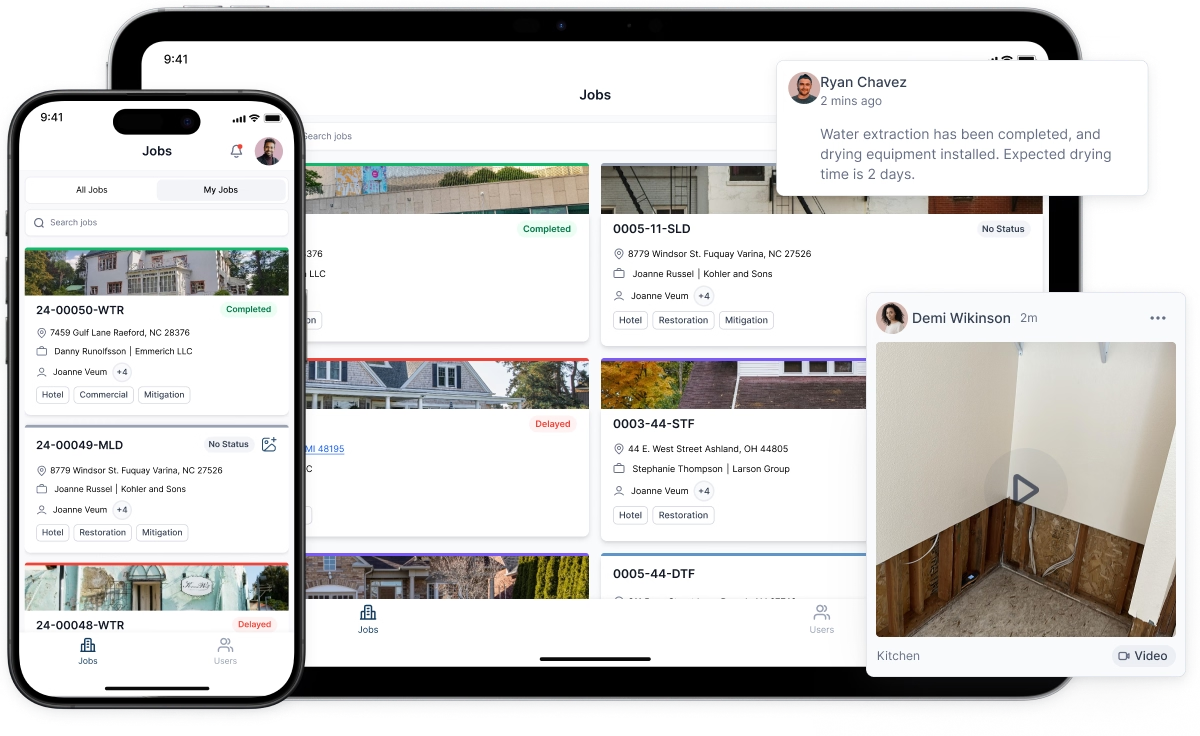
Restoration project management software serves as the central nervous system of your business. Unlike generic project management tools, restoration-specific solutions are designed to address the unique challenges of water damage, fire damage, mold remediation, and other restoration services.
At its core, restoration project management software manages the complete lifecycle of each project. It tracks timelines, coordinates team members, monitors resource allocation, and ensures quality control throughout the restoration process. Modern platforms allow teams to collaborate seamlessly, whether they're on-site or in the office, ensuring that critical information is always accessible to those who need it.
The software typically includes features for scheduling, task assignment, progress tracking, photo documentation, and client communication. By centralizing all project-related information, restoration companies can reduce administrative overhead and ensure that nothing falls through the cracks.
The Power of Xactimate Estimates in Modern Restoration
Xactimate has long been the industry standard for estimation in the restoration and insurance industries. Understanding how to leverage xactimate estimates effectively can dramatically improve your business's accuracy and profitability.
When you create xactimate estimates within an integrated restoration management platform, you gain several advantages. First, the estimates are instantly synchronized with your project management system, eliminating manual data entry and the errors that come with it. Second, you can generate professional, detailed estimates that insurance adjusters recognize and trust, which accelerates the claims approval process.
For contractors looking to embrace modern workflows, remote xactimate estimate capabilities have become invaluable. Estimators can now use mobile devices or cloud-based interfaces to input data from the field and generate detailed estimates without returning to the office. This significantly reduces turnaround time and allows your team to provide quotes to customers faster than ever before.
CRM for Restoration Companies: Building Lasting Customer Relationships
Customer relationship management is critical for any service-based business, and restoration companies are no exception. A CRM for restoration companies differs from generic CRM platforms because it understands the specific customer journey in restoration work.
When a property owner experiences water damage or fire damage, they're often stressed and confused about next steps. A purpose-built CRM for restoration companies helps you manage every touchpoint of the customer experience. From the initial call through claims management, repair completion, and follow-up inspections, the system tracks all interactions and ensures consistent, professional communication.
The best CRM solutions integrate directly with your restoration project management software, creating a unified view of each customer. You can see their project history, past issues, communication preferences, and any special requirements—all in one place. This integration eliminates the need to toggle between systems and ensures that no customer detail gets lost.
Restoration Marketing Software: Growing Your Business Strategically
Acquiring new customers is essential for business growth, and restoration marketing software helps you attract and convert prospects more effectively. While restoration project management focuses on execution, restoration marketing software focuses on the top of your funnel.
Modern restoration marketing software includes tools for email campaigns, customer segmentation, performance tracking, and ROI measurement. When integrated with your CRM, marketing software enables sophisticated workflows. For example, you can automatically nurture leads based on their stage in the sales process, send targeted messages to past customers who may need maintenance services, and identify your most profitable customer segments.
Integration between your restoration marketing software, CRM for restoration companies, and project management platform creates a closed-loop system where you can track every customer from first impression through completion and beyond. This data-driven approach allows you to optimize your marketing spending and focus on the channels and messages that drive the most qualified leads.
The Complete Software Ecosystem: Integration as the Key to Success
While discussing individual components is useful, the real power emerges when restoration project management software, CRM for restoration companies, estimation tools, and restoration marketing software work together seamlessly.
Imagine this workflow: A potential customer contacts you online through your website, which feeds into your CRM. Your team reviews the customer record and sees they've never worked with you before but live in your service area. An automated email welcomes them and begins nurturing them toward scheduling an inspection. Once scheduled, the appointment appears in your project management software, and field team members see it on their mobile devices.
The estimator arrives with a mobile device configured for remote xactimate estimate generation. Using photos and measurements, they create a detailed xactimate estimate right there on-site. The customer receives a professional quote within hours instead of days. Once approved, the estimate seamlessly transitions into the project management system, becoming the basis for scheduling, resource allocation, and work orders.
Throughout the project, your restoration marketing software continues nurturing other prospects, your CRM tracks all customer communication, and your project management software ensures quality execution. When the project completes, automated follow-up messages ensure customer satisfaction and introduce upsell opportunities for related services.
Key Features of Top-Tier Restoration Management Solutions
Not all restoration management platforms are created equal. The best solutions share several characteristics:
Mobile Accessibility: Your team needs access to critical information whether they're in the office, on-site, or in the field. Cloud-based solutions with robust mobile apps ensure that estimators can create remote xactimate estimates, supervisors can monitor progress, and team members can receive real-time updates.
Integration Capabilities: The platform should integrate with insurance company systems, accounting software, and other business applications. This reduces manual data entry and ensures information flows seamlessly across your technology stack.
Estimation and Quoting Tools: Built-in or tightly integrated estimation features, including xactimate estimates compatibility, enable your team to create accurate, professional quotes quickly.
Customer Management: Comprehensive CRM functionality allows you to track customer history, preferences, and communication, providing personalized service that builds loyalty.
Marketing Automation: Integrated restoration marketing software helps you nurture leads, track campaign performance, and identify opportunities to expand customer lifetime value.
Reporting and Analytics: Dashboards and reports provide visibility into key metrics like project profitability, team productivity, customer satisfaction, and marketing ROI.
Overcoming Common Implementation Challenges
Adopting new restoration management software requires planning and change management. Many companies struggle during implementation because they underestimate the effort required to migrate data, train teams, and adjust workflows.
Success starts with executive buy-in and clear goals. Before selecting software, document your current processes and identify pain points. What problems do you want to solve? How will success be measured? Are you looking to improve profitability, speed, customer satisfaction, or all three?
Choose a vendor who provides comprehensive training and support. The best restoration project management software is worthless if your team doesn't know how to use it effectively. Look for providers who offer onboarding programs, documentation, video training, and responsive customer support.
Start with core functionality and expand gradually. You don't need to implement every feature simultaneously. Many successful companies start with basic project management and estimation, then add CRM functionality, then integrate restoration marketing software as team members become more proficient.
Measuring ROI and Success
Implementation is a significant investment, so it's important to measure results. Track metrics like:
Turnaround Time: How quickly can your team respond to customer inquiries, generate estimates, and complete projects? Restoration project management software typically reduces turnaround time by 20-40%.
Profitability: Better estimation accuracy and project tracking lead to improved margins. Many companies report 10-15% improvements in project profitability within the first year.
Customer Satisfaction: With better communication and tracking, customers typically report higher satisfaction. Your CRM for restoration companies helps you maintain consistent service standards.
Team Productivity: When administrative burden decreases, team members focus on value-added activities. Measure hours spent on billable work versus administrative tasks.
Marketing Effectiveness: Your restoration marketing software should track lead sources, conversion rates, and customer acquisition costs, allowing you to optimize your marketing mix.
The Future of Restoration Management Technology
The restoration industry continues to evolve. Emerging technologies like artificial intelligence, drone inspections, and augmented reality are beginning to transform how estimates are created and projects are managed.
Leading restoration management software platforms are incorporating AI to improve estimate accuracy, predict project timelines, and identify risks before they become problems. Mobile capabilities continue to improve, making remote xactimate estimates faster and more accurate. Integration with satellite imagery and other data sources is enhancing damage assessment.
Companies that embrace these technologies now will gain competitive advantages as they mature. The restoration software landscape is becoming increasingly sophisticated, and the gap between technology leaders and laggards will continue to widen.
Conclusion: Your Path to Modern Restoration Management
Modern restoration companies operate in a complex, competitive landscape where efficiency, accuracy, and customer service are competitive differentiators. Restoration project management software, integrated with CRM for restoration companies, estimation tools like xactimate estimates, and restoration marketing software, creates a comprehensive platform for business growth.
The benefits extend beyond efficiency. When you integrate these systems, you create a data-rich environment where decisions are informed by facts rather than intuition. You can identify your most profitable services, your best-performing teams, and your most valuable customers. You can respond to customer needs faster than competitors and provide superior service that drives referrals and repeat business.
If you haven't yet modernized your restoration management approach, now is the time. The cost of waiting grows every year as technology matures and becomes more essential to competitive success. Start with your biggest pain points, select a vendor that understands the restoration industry, and commit to proper implementation and adoption. The rewards—in terms of profitability, growth, and team satisfaction—are well worth the effort.


